
 EN
EN
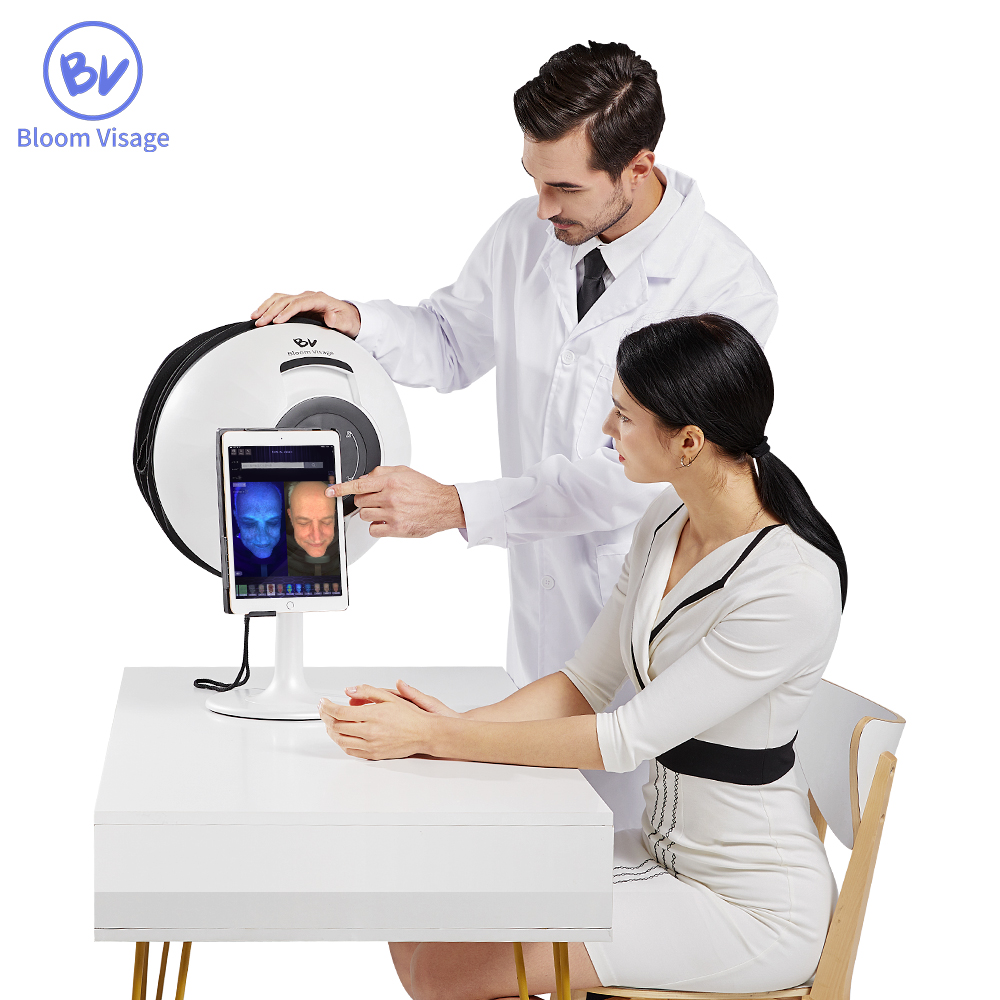
Interpreting a skin analysis report isn't just for dermatologists or clinic technicians. Sophisticated imaging and data-driven analytics make it easy for any professional esthetician or beauty retailer to read skin between the lines. For over a decade at Bloom Visage, we've been designing intuitive beauty devices; from our hi-res Skin Analyzer to our related skin treatments, our technology interprets our biometrics to recommend your perfect skincare. We'll take you through the basic readings in an average skin analysis report and show you how to translate them accurately into specific treatments with our smart skin equipment.
Understanding the Core Metrics in a Skin Analysis Report
How to understand a professionally produced skin analysis report? Biometrics is the first pass with your Bloom Visage Skin Analyzer and you'll be looking at a score summarizing the various inputs concerning hydration levels, oil levels, pigment, texture, pore appearance and elasticity. But the data is most relevant when it is compared against a standardized (or normed) database at your age level; in essence, comparing against people your age or look age. Then you'll want to study the deviation for those variables that appear to be performing higher or lower than other variables or the norm.
A low reading in hydration and a high reading for trans-epidermal water loss, TEWL, indicate a compromised barrier function. Having high readings of red and brown spots will indicate a post-inflammatory and/or hyperpigmented state (UV damage). UV fluorescence is also interesting for seeing porphyrin activity, indicating subsurface activity from bacteria that can potentially form acne.
Translating Pigmentation and Texture Data into Actionable Plans
The next move is to target identified weaknesses. Clients with mottled brown spots will benefit from recommendations based on the report's Pigmentation Score. A Plasma and Detector combination will identify exact areas that need attention. Then, cold atmospheric plasma administered by the hand-piece will encourage cell turnover and boost topical brightener penetration. For clients with uneven texture and larger pores—caused by lack of desquamation-we'll suggest the Skin Care Plasma session, which uses ionized gas and ROS production to gently exfoliate keratinocytes and boost fibroblast activity, refining skin topography. The 3D topography maps shown on the display identify specific facial areas (T-zone and cheeks, for example) that might require additional treatment, preventing over or under-treatment.
Leveraging Hydration and Elasticity Readings for Device Selection
Clients with dehydration and low elasticity present a distinct concern that requires a different approach. Your main data points in that scenario will be the "Water-Lipid Balance" and the "Elasticity Decay Curve." Instead of an entirely topically based skin care program, consider incorporating a Skin Booster, which uses electroporation or micro-vibration to form temporary aqueous channels that allow high-molecular-weight hyaluronic acid and peptides to penetrate into the DEJ. With a Bloom Visage Skin Booster, the report's real-time, 15-20% increased moisture value post-treatment (which can be displayed in-clinic to increase client engagement) confirms its efficacy for dehydration and poor tone and texture. This process stimulates fibroblast growth for increased cellular elasticity over a short period. For a client with poor elasticity and some mild hyperpigmentation, use the booster immediately after a mild plasma prep. The plasma is already working on cellular turnover while the barrier is more receptive, so skin-preparing agents delivered by the booster's micro-pulses penetrate deeper into the lower epidermis.
Integrating Multiple Report Parameters for Combination Protocols
A client almost always presents with an array of concerns; mild dehydration, hyperpigmentation scattered throughout, and localized rosacea. This is where your Bloom Visage equipment ecosystem really goes to work. Combining a UV-fluorescence-induced bacterial analysis along with a 3D topography map, you will build a regimen that varies therapies and frequency of a chosen treatment based on skin conditions for optimal progress. Over the next month, for example, implement plasma and the detector for spots in the first two weeks. Week three: skin care plasma for texture reduction, followed by the booster at the end of week four. Skin response is then assessed by the system, so treatment protocols may be adjusted for specific sensitivities and response rate. The system helps you fine-tune the output of any equipment based on client responses, thus preventing sensitivity over-exposure to combined treatments.
Using Progress Reports to Refine Long-Term Skincare Regimens
The underutilized tool within every skin analysis report is the "Trending" or "Historical comparison". Bloom Visage's proprietary program saves each skin analysis result and builds a longitudinal graph to display how parameters are increasing or decreasing. This final report segment will enable and/or recommend maintenance based on data. If pigmentation scores trend upward after a certain in-clinic Skin Analyzer skin analysis evaluation, consider a Booster or plasma spot touch-up recommendation for your client’s use at home or suggesting the next step for increasing treatment frequency of plasma treatments. Elasticity readings plateauing after 6 sessions will confirm you can now afford to lengthen a patient's next planned visit with you every 4 weeks, ultimately saving money but maintaining effectiveness. It is best to show any trending graphically. Progress of any sort shown on screen will demonstrate success, and will justify your initial choice of purchasing highly effective equipment.
Ultimately, reading any skin analysis report comes down to linking a quantitative measurement with a targeted mechanistic intervention. A high quality skin analysis report provides the unbiased data you need to identify and correct skin issues with precision. By utilizing our full suite of devices—including the Skin Analyzer, Skin Booster, Skin Care Plasma, and Plasma and Detector—you can tailor solutions to each client's unique needs. This comprehensive approach increases patient satisfaction and builds a valuable, respected esthetics practice.
Table of Contents
- Understanding the Core Metrics in a Skin Analysis Report
- Translating Pigmentation and Texture Data into Actionable Plans
- Leveraging Hydration and Elasticity Readings for Device Selection
- Integrating Multiple Report Parameters for Combination Protocols
- Using Progress Reports to Refine Long-Term Skincare Regimens