
 EN
EN
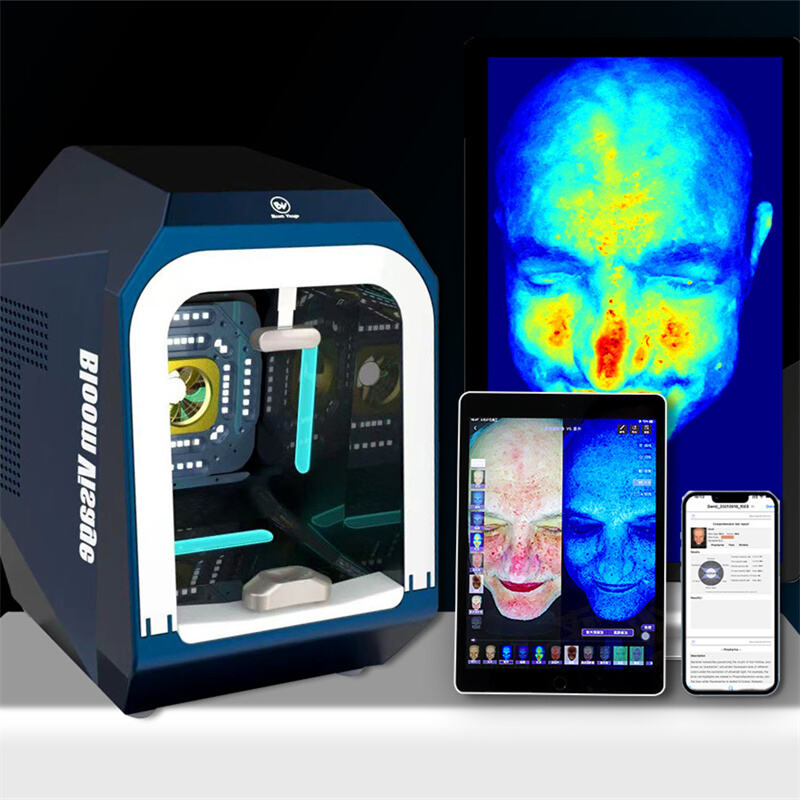
Indeed, with the size of the global skin care devices market expected to grow at a CAGR of 26.4% from 2025 to 2034 (as per Business Research Insights), the year 2026 becomes a key period for innovations in the skin analysis devices space. At an all-time high, consumer demand is pushing gadgets towards more than just detection; rather to solutions that are holistic and future-facing, meeting the requirement of consumers for accurate, convenient, and personalized solutions.
Moving along the spectrum from Detect to Prevent: AI-Powered Predictive Analysis
Artificial intelligence (AI) is no longer a matter of accuracy improvement anymore- it is converting skin analysis into more of a proactive than a reactive endeavor. In 2026, the most advanced devices will be able to use machine learning to anticipate the presence of skin issues (e.g., an imminent pigmentation, the first signs of sagging, etc.) instead of merely detect them. It is supported by market statistics: AI-based skin analyzers have already dominated 42 percent of technical innovations in the industry (Business Research Insights) and the diagnostic accuracy of the tools is 36 percent higher than the performance of non-AI devices.
In the case of Bloom Visage, the trend supports a 10-year period of investment in the development of algorithms. AI models in our devices are trained on various datasets of skin, which, in addition to providing real-time data on the condition of the human skin (hydration, pore, pigmentation, et cetera), predicts how the skin can be altered with the environment (e.g., UV exposure, humidity). This predictive care will allow dermatologists and beauty experts to create preventive care- taking care of problems before they start showing.
Portability and Home Accessibility: Anywhere Salon-Grade Care.
At-home beauty devices are experiencing a boom courtesy of the preference of consumers to carry out the analysis at home. According to a Mintel survey, 64 percent of U.S. consumers value multi-purpose, home-use beauty tools, rather than frequent visits to the salon and 46 percent are willing to spend more on time-saving convenience (2026): smaller, lighter devices (e.g., handheld scanners under 2kg) that will connect to the smartphone will allow users to monitor the health of the skin daily.
The OEM/ODM capabilities of Bloom Visage would suit this demand. Our Shanghai factory has come up with small iOS-enabled devices such as our next portable analyzer that has the same precision in quality (e.g. 0.2mm accuracy to detect fine lines) but at the same time is user-friendly to consumers. These gadgets automatically transmit the information to mobile applications and enable users to compare results across time and remotely exchange insights with their skin experts.
Multi-Technology Fusion: Intensive, In-depth Understanding.
The days of single-function analyzers are long gone. In 2026, it will be possible to find a device that combines multi-spectral imaging, 3D reconstruction, and even optical coherence tomography (OCT), in order to obtain both surface and sub-surface skin data. This is a solution to a big pain: 63% of medical aesthetics institutions report that they cannot find serious problems with the skin as the leading challenge (as per 2025 China Aesthetic Device Market White Paper).
This trend is supported by the fact that Bloom Visage is strong in terms of integrating its hardware and software. Bloom Visage-V7 is the flagship in our multi-spectral imaging technology brand, utilizing visualization of deep pigmentation and inflammation (down to .5mm below the surface) and imaging to examine the depth of fine lines and facial symmetry. All devices are ISO-compliant, which ensures accuracy and consistency of data irrespective of the originating establishment (dermatology) or salon.
Categories and Data to Action: Tailored Skincare Ecosystems.
No longer will skin analysis be a stand-alone event, but the fulcrum on which personalized skin care systems rest. From 2026 onwards, it will link the devices directly to application suggestions, product databases, and even virtual try-on products. As an example, the latest prototype of an electronic skin by MIT and Amorepacific (CES 2026 preview) connects real-time data of the skin to an application that recommends the time to reapply sunscreen and dosage of serums.
We are developing this ecosystem at Bloom Visage by creating our software in R&D. The devices we create will result in customized information that will connect identified skin problems to the specific remedy (e.g., hydration boost to dry areas) and be integrated into client management software. This data-to-action cycle will assist beauty professionals to gain more client trust and acceptance of treatments- the driving force of business.
Conclusion
The year 2026 will transform the concept of skin analysis to be a combination of accuracy, ease, and customization. In the case of Shanghai Weijiayu Trading Co., Ltd., they are not merely industry trends, but rather an opportunity to fulfill our promise of innovation. Since the market is expanding, we are committed to the transformation of the innovative technology into applicable and effective solutions of the skin health.