
 EN
EN
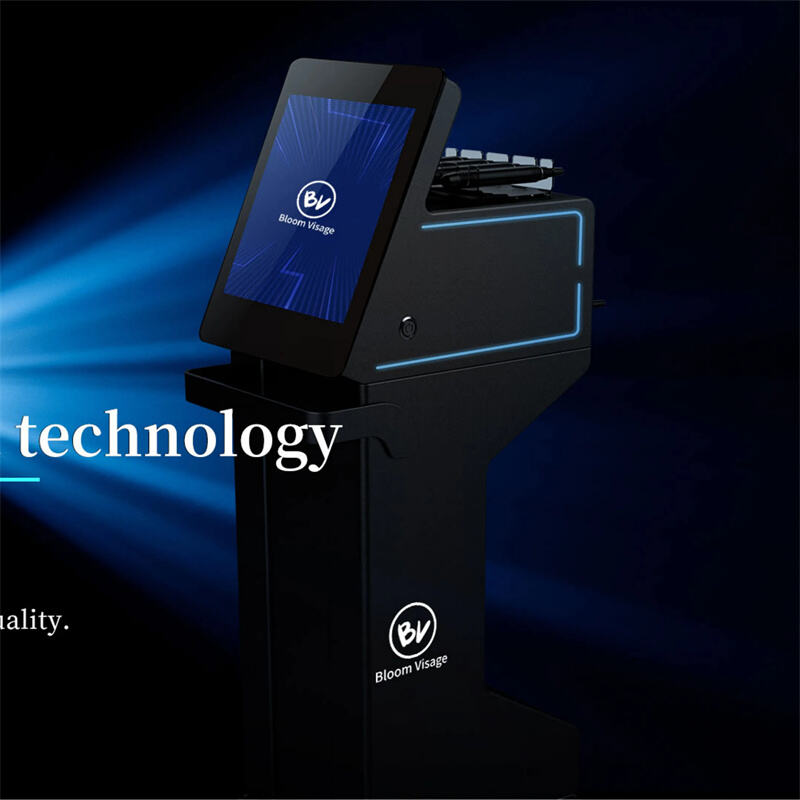
The market of the beauty technology is enormous with the points offering personal home appliances up to professional clinical systems. When it comes to the clinics, spas, and the brands the equipment used is one of the most significant strategic decisions that determine the quality of services, client satisfaction, and business growth. It is not in hunting out the most expensive machine, but the strongest that is in harmony with your specific object. The most significant points of these choices will be given in this guide.
Stating Your Essential mission and Target Market.
The first step is clarity. Will you enhance consultations or treatment and/or both? It depends on the nature of the device you are intending.
Diagnosis and Consultation: The high quality digital skin analyzers are required. Locate systems that have multi-spectral imaging (standard light, polarized light, UV light) in order to assess issues on the surface and underneath the surface (pores, pigmentation, hydration, and bacteria).
To Treatment Delivery: Which issues about skin do you discuss most often? LED light therapy is applied when treating acne or anti-aging, radiofrequency (RF) and microcurrent are applied when lifting and tightening, and laser platforms are applied when dealing with more complex problems like pigmentation or hair removal.
Being aware of the primary requirements of your customers i.e. anti-aging, acne obsession, or a general skin care will lead to the technology with the most relevant clinical action.
The Efficacy and Safety Evaluation Foundations for Technology.
Once the category is established, trace the scientific background of the technology and its safety record.
Evidence-Based Parametric: locate the study of the wavelengths (LED/Laser), energy (RF) and the frequency that has been proven in the clinical practice in your case. One of them is the red light at the wavelength of 633nm that has been widely investigated in collagen production.
Safety Certifications: Weigh weight on equipment’s, which have the proper medical device certification (give examples like CE, FDA clearance where required) of some well-known bodies. This has to be not sacrificed so as to save the clients and your practice.
In-built Safety: Aim to research on such safety measures as skin contact sensors, automatic adjustment of energy and calibrated output to achieve consistency and safety of treatment.
Assess Operational Workflow and Integration Ability.
The usability of a powerful machine can only be as good as it can be. Consider how you will incorporate it into your day to day operations.
Software & Data Management: Does the device have user friendly software regarding client profile, tracking treatment and production of before/after reports? This is because you need to be fluent in integrating fluency into your consultation process in order to have the capacity to demonstrate value.
Training and Support: Evaluate training program and technical support by the manufacturer. Multifaceted equipment requires onboarding of your employees so that they use it well and become comfortable with it.
Durability and Maintenance: Consider the expected usage and inquire of how long the device can be used, warranty and whether it is easy or expensive to fix or replace its components.
To achieve a compromise between Performance and Business Realities.
Finally, align the investment with your own business model.
Total Cost of Ownership: Get beyond the cost of purchase. Add the costs of maintenance, the potential cost of replacement of parts and any other required consumables (gels or tips) to be aware of the long term cost.
ROI and Service Potential: Determine what each treatment is going to bring in the form of revenue and how many treatments must be made to recoup the investment. Record as well whether the device is able to facilitate you to provide a new package of premium service.
Scalability and Flexibility: In the event of expanding businesses or specialty services offered by an OEM/ODM company, the cooperation with a manufacturer that can be modified and provide scalable production can become a significant long-term advantage as it would allow adjusting the brands to the needs.
Conclusion: A Strategic Partnership Growth Strategy.
It is a deliberate and strategic process of deciding on what you want the beauty equipment to be, to certify its science and ensure that it fits into your working process and justify its business. The proper equipment in the competitive market does not merely dictate superior results to the customers, but also builds your authority and results in a long-term rise.