
 EN
EN
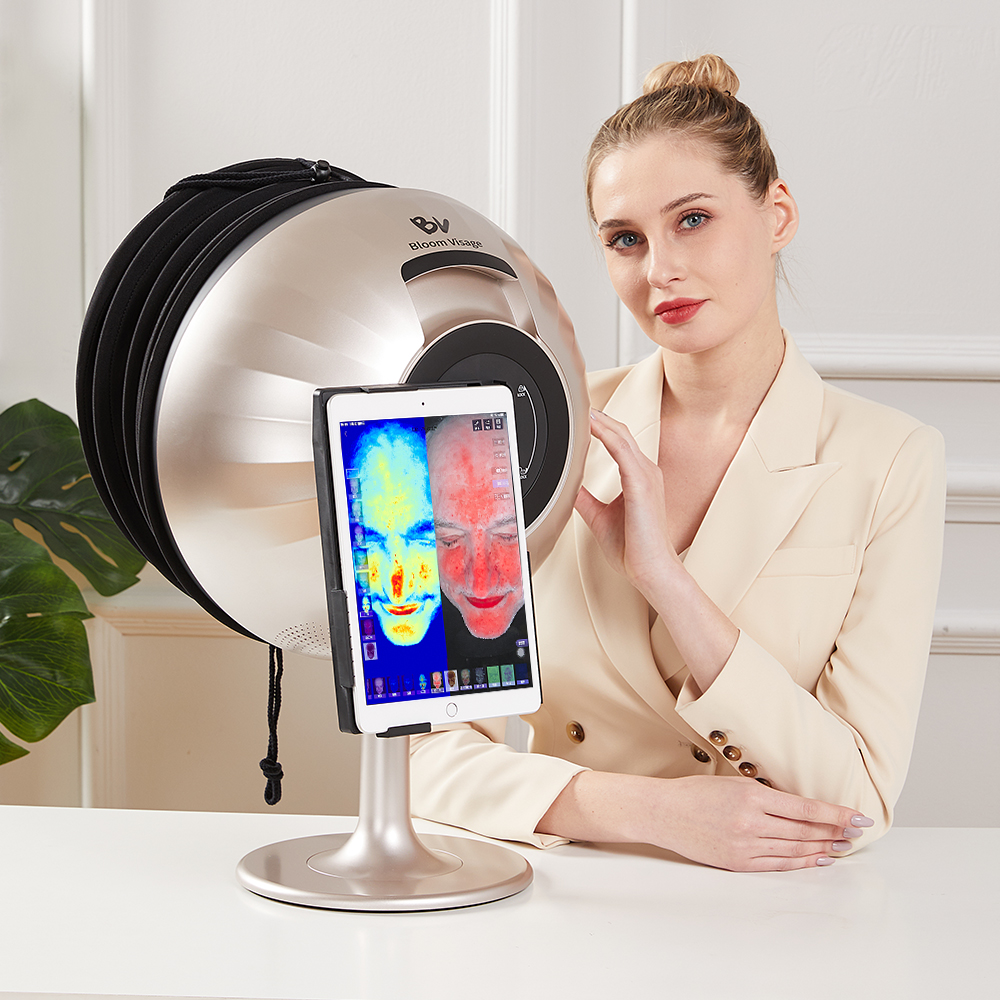
Operating an international skin scanning business is one of the most profitable business ideas of your life so far in relation to beauty tech industry. With consumers focusing more on custom skincare and diagnostics driven by data, high-accuracy skin analyzers are a fast growing and global niche that you can benefit from. Expanding this to Europe, South East Asia and North America however requires thorough knowledge and consideration apart from a cutting-edge product; these elements are regional approach and consumer behavior, and regulation and standards. Since 2014, manufacturer and SaaS provider as it is—Bloom Visage had been providing partnership on the aforementioned market, to such extent that it has an experienced R&D team to back you up along with an OEM and ODM service, in-house brand and an advantage over the competitors. This practical plan of implementation would be:
Understanding Regional Market Nuances for Skin Analyzers
Before even shipping a unit, you need to understand that different regions think about skin analysis differently. North American customers expect data accuracy and client privacy as well as software that can be incorporated into a medical practice management package. Dermatologists and medispas depend on the ability to repeat skin analysis to monitor their clientele over time. Europe customers desire the ability to achieve a CE mark, are increasingly drawn to environmentally friendly units, and want products with simpler multi-language interface features and are concerned about EMI compliance. In Southeast Asia, affordability, mobility, and mobile connectivity are key—beauty entrepreneurs in Jakarta, Bangkok, and Manila want to offer small beauty studio consults from compact skin scanners that tether to a smartphone. At Bloom Visage, we address these diverse needs by offering flexible software modules and tailored hardware finishes-designs that reach the world without ever losing touch.
Regulatory Pathways: CE, FDA, and Local Approvals
Your launch is dictated by approval. The CE marking framework for Europe's Medical Device Regulation (MDR) will classify most skin analyzers as Class I or IIa, with higher risk models requiring assistance from a notified body in the design phase. Start early with a strong CE technical file including ISO-compliant test reports, risk management analysis, software validations - all of which are part of Bloom Visage’s holistic IT engineering package, from software algorithms to EMC certification. If the device is considered diagnostic or provides treatment guidance, it may be subject to more stringent review under the MDR, requiring Notified Body involvement. In the US, such devices may require an FDA 510(k) submission.
Non-diagnostic beauty devices require registration as a foreign manufacturer with the FDA, but are simpler. Be prepared to allocate 6-12 months for each of these regulatory processes. There are local authorities for many ASEAN countries (BPOM in Indonesia, Thai FDA in Thailand, HSA in Singapore). Fortunately, most of them accept a CE or FDA certificate, supplemented by local language translation to expedite market access. It may be wise to enlist a local regulatory consultant in every market.
Product Localization: Software, Language, and Skin Tone Algorithms
The skin analyzer is only as valuable as its software interface. For European markets, you must ensure GDPR compliance for data storage and explicit user consent for cloud data storage and sharing. Metric units (cm, mm) and at least five regional languages are standard. In the US, HIPAA compatibility and EMR integration support are critical.
Southeast Asia is all about instant results, rapid on 4G/5G connections and streamlined UIs with support for key regional languages such as Bahasa, Thai and Vietnamese. Even more important is the algorithm that correctly analyzes skin phototypes: from fair European skin to darker Southeast Asian tones. With years of R&D in Bloom Visage we can guarantee that our skin analyzers produce accurate and stable measures on wrinkles, pores, pigments and moisturization on all ethnicities and OEM option enabled us to distribute with individual labeled white-label app for the seamless link to end user
Building Distribution Channels: B2B, B2C, and Hybrid Models
Your go-to-market channel will differ by region. The US market is primarily B2B, engaging with well-established aesthetic equipment distributors who currently service plastic surgery clinics and dermatology practices. Visit conferences such as IMCAS or the AAD to forge partnerships. In Europe, we recommend a hybrid strategy—we supply beauty schools, chains and a variety of smaller, e-commerce-centric beauty businesses with our devices.
Social commerce is the most relevant to Asia. The most effective channels, in term of reaching out salons and consumers who purchased the at-home skin scanner will be a local distribution partner who can utilize influencer’s network with live demos. In each region, try to segment the tiered pricing: a medical/professional skin analysis device with strong software and in-depth metrics, and a lite version skin scanner targeted at solo-preneurs. Bloom Visage offers the OEM service needed to provide different options with distinct branding – and color.
After-Sales Service, Spare Parts, and Software Upgrades
Success hinges on after-sales infrastructure. In Europe and North America, ensure local or contracted service partners are in place and able to repair and calibrate devices, and replace sensors within 48 hours. Offer annual SaaS fee that covers routine maintenance and regular software updates, including new analysis metrics such as UV damage and pore depth. For Southeast Asia, where shipping may be costlier, have us send the distributor a supply of spare parts such as calibration plates, USB cables and lens covers.
Bloom Visage’s manufacturing facilities in Shanghai can speedily ship any parts required and our remote support platform enables us to troubleshoot software problems virtually. Make sure there’s clear after-sale policy—an industry standard of 2 years for professional skin analyzers, including a DOA policy, will build confidence and encourage customer retention.
Final Steps: Pilot Testing and Local Partnerships
Don’t go in blind. Initiate pilot programs with 5-10 test clients across each region—a mix of skin care practitioners, dermatologists and beauty influencers. Collect feedback on the devices’ speed, ease-of-use and report clarity. According to this feedback, improve your software. Also establish cooperation with an officially accredited logistics operator experienced with the customs and international shipping procedures for precision optics, as a skin analyzer is, could face severe import restrictions.
Lastly, appoint country manager or a resident local representative whom is knowledgeable with the language and local business trends. The execution through systematic planning and setup will bring to great success the expansion internationally. Bloom Visage is committed to journey of you, with excellent technologies and an expertise that leads you to mutual success.
Table of Contents
- Understanding Regional Market Nuances for Skin Analyzers
- Regulatory Pathways: CE, FDA, and Local Approvals
- Product Localization: Software, Language, and Skin Tone Algorithms
- Building Distribution Channels: B2B, B2C, and Hybrid Models
- After-Sales Service, Spare Parts, and Software Upgrades
- Final Steps: Pilot Testing and Local Partnerships